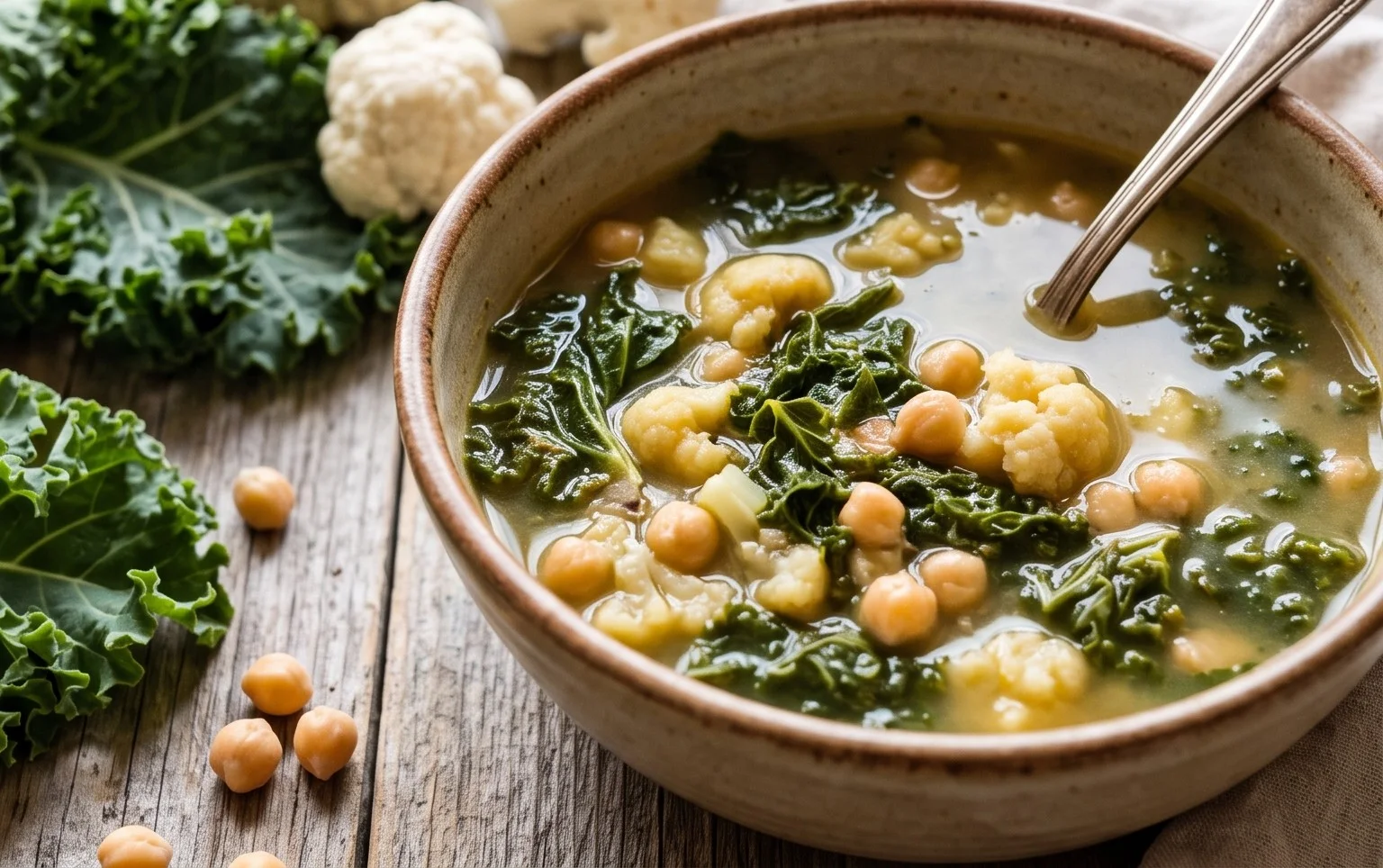
Kale and Cauliflower Soup can be a nourishing and simple addition to your daily routine. This comforting soup brings together two powerhouse vegetables, offering a gentle way to boost your intake of essential nutrients. For those looking for easy, wholesome meal options that support overall well-being without complexity, this recipe is a wonderful choice. It’s particularly relevant for individuals seeking to incorporate more plant-based goodness into their diet, or anyone aiming for a light yet satisfying meal.
This article will guide you through the benefits of these ingredients and provide a straightforward recipe. We’ll explore how incorporating this delicious soup can contribute to a balanced lifestyle and discuss its role in a mindful approach to eating.

Kale and Cauliflower Soup: A Nutrient-Rich Powerhouse for Your Wellbeing
Understanding Kale and Cauliflower Soup
Kale and cauliflower soup is a wholesome, flavorful dish that brings together two of the most nutrient-dense vegetables in the cruciferous family: kale and cauliflower. In plain language, it’s a soup made by simmering chopped kale and cauliflower, often with other vegetables like onions, garlic, and carrots, in a broth (vegetable or chicken). It can be creamy, smooth, or chunky, depending on how it’s prepared, and is frequently seasoned with herbs and spices to enhance its taste and health benefits. This soup is celebrated for its simplicity, versatility, and the impressive nutritional profile it offers.
Common Signs or Factors Pointing to the Benefits of This Soup
While no single food can cure ailments, incorporating kale and cauliflower soup into your diet can support general wellbeing and address common concerns. You might find yourself drawn to this soup if you are:
* Seeking ways to boost your intake of vitamins and minerals.
* Looking for foods that are rich in fiber, promoting digestive health.
* Interested in incorporating antioxidant-rich foods into your meals.
* Trying to manage your weight by choosing satisfying, lower-calorie options.
* Experiencing mild digestive discomfort that could benefit from increased fiber.
* Wanting to add more plant-based meals to your regular eating pattern.
* Concerned about supporting your immune system.
The common thread here is a proactive approach to health and a desire to nourish your body with wholesome ingredients.
General Guidance on Incorporating Nutrient-Dense Foods
Health authorities around the world consistently emphasize the importance of consuming a diet rich in fruits, vegetables, and whole grains. The general guidance highlights that:
* A diet abundant in vegetables, particularly those from the cruciferous family, is associated with numerous health advantages.
* Fiber-rich foods are crucial for maintaining a healthy digestive system and can contribute to feelings of fullness, aiding in weight management.
* Antioxidants, found in high concentrations in colorful vegetables like kale and cauliflower, play a role in protecting the body’s cells from damage.
* Regularly choosing nutrient-dense meals over highly processed options is a cornerstone of a balanced and healthy eating pattern.
* Hydration and a varied diet are key components of overall wellness, supporting everything from energy levels to immune function.
This guidance underscores that incorporating vegetables like kale and cauliflower into your meals is a widely recommended practice for good health.
Practical Everyday Habits to Adopt
Integrating kale and cauliflower soup into your routine can be quite simple and adaptable to your lifestyle. Here are some practical habits you can adopt:
* **Meal Prep:** Dedicate a portion of your weekend to preparing a large batch of kale and cauliflower soup. Once cooled, portion it into individual containers for easy lunches or dinners throughout the week. This saves time on busy weekdays and ensures you have a healthy option readily available.
* **Smart Ingredient Swaps:** When making your soup, consider adding extra vegetables like spinach, leeks, or celery to further enhance the nutrient profile. You can also opt for low-sodium vegetable broth to control salt intake.
* **Batch Cooking for Freezing:** If you make a large quantity, freeze portions in airtight containers or freezer bags. This is a great way to have healthy meals on hand for weeks to come. Thaw overnight in the refrigerator and reheat gently on the stovetop or in the microwave.
* **Versatile Serving:** Enjoy your soup as a light lunch, a starter to a main meal, or even a satisfying dinner with a side of whole-grain bread or a small salad. You can also blend it for a creamier texture if preferred.
* **Flavor Customization:** Experiment with different herbs and spices. Adding a pinch of nutmeg, a dash of turmeric, or a squeeze of lemon juice can significantly alter the flavor profile and offer additional health benefits.
* **Regular Inclusion:** Aim to include soup, whether it’s kale and cauliflower or another vegetable-based variety, at least a couple of times a week as part of your balanced eating strategy.
These habits make it easier to consistently benefit from the goodness of nutrient-rich foods like kale and cauliflower soup.
What the Evidence Does and Does Not Support
The scientific evidence strongly supports the benefits of diets rich in vegetables like kale and cauliflower.
What the evidence does support:
* **Nutrient Density:** Kale and cauliflower are packed with essential vitamins (like Vitamin K, Vitamin C, and Vitamin A), minerals (such as potassium and manganese), and fiber. These nutrients are vital for a wide range of bodily functions, from bone health to immune support and vision.
* **Antioxidant Power:** Both vegetables contain potent antioxidants, including flavonoids and carotenoids. These compounds help combat oxidative stress in the body, which is linked to chronic diseases.
* **Digestive Health:** The high fiber content in kale and cauliflower supports a healthy gut microbiome, promotes regular bowel movements, and can contribute to a feeling of satiety, which is beneficial for weight management.
* **Potential for Disease Prevention:** Diets rich in cruciferous vegetables have been associated in observational studies with a reduced risk of certain chronic diseases, though it’s important to note these studies show associations and not direct cause-and-effect.
* **Immune Support:** The Vitamin C content in these vegetables is crucial for a healthy immune system, helping the body defend against infections.
What the evidence does not support:
* **Miracle Cure Claims:** Kale and cauliflower soup, or any single food, is not a cure for specific diseases or a magic bullet for rapid weight loss or complete health transformation. Health is multifaceted and requires a holistic approach.
* **Specific Dosage Requirements:** While these vegetables are nutritious, there are no scientifically established “dosages” for kale and cauliflower soup for specific health outcomes in the general population. It is part of a balanced diet.
* **Direct Causation for Disease Prevention:** While epidemiological studies show links between cruciferous vegetable consumption and lower rates of certain diseases, these findings are often based on complex dietary patterns and cannot definitively prove that kale and cauliflower soup *alone* prevents these conditions. Many other lifestyle factors are involved.
* **Detoxification Claims:** The concept of “detoxifying” the body with specific foods is largely unsupported by robust scientific evidence. The liver and kidneys are the body’s primary detoxification organs, and a healthy diet supports their function.
It’s crucial to approach health information with a balanced perspective, focusing on the established benefits of nutrient-rich foods within the context of an overall healthy lifestyle.
Common Myths Worth Correcting
Several myths surround healthy eating and specific foods, and kale and cauliflower soup is no exception. It’s important to clear up some common misconceptions:
* **Myth 1: Kale is difficult to digest and can cause bloating for everyone.**
* **Correction:** While some individuals may be sensitive to certain vegetables, the idea that kale is universally hard to digest is a myth. Cooking kale, as is done in soup, makes it more digestible. Furthermore, the fiber in kale actually supports gut health for most people when consumed as part of a balanced diet. Starting with smaller portions and gradually increasing intake can help most people tolerate it well.
* **Myth 2: Cauliflower has very little nutritional value compared to other vegetables.**
* **Correction:** This is entirely untrue. Cauliflower is a nutritional powerhouse, offering significant amounts of Vitamin C, Vitamin K, folate, potassium, and fiber. It’s a well-rounded vegetable that complements the nutritional profile of kale beautifully in this soup.
* **Myth 3: You need to eat massive quantities of kale and cauliflower to see any benefits.**
* **Correction:** While consistency is key, you don’t need to consume extreme amounts. Regular, moderate inclusion of these vegetables in your diet as part of a varied eating pattern will contribute to your overall nutrient intake and health benefits over time.
* **Myth 4: All vegetable soups are bland and boring.**
* **Correction:** The beauty of kale and cauliflower soup lies in its adaptability. With the right seasoning – fresh herbs, garlic, onion, a touch of spice, or even a swirl of healthy fat like olive oil or a dash of cream – it can be incredibly flavorful and satisfying.
Understanding these myths helps to demystify healthy eating and encourages a more accurate and positive approach to incorporating nutritious foods into your diet.
When to Speak to a Qualified Professional
While kale and cauliflower soup can be a wonderful addition to a healthy diet, it’s important to recognize when professional medical advice is necessary. You should speak to a qualified healthcare professional, such as a doctor, registered dietitian, or nutritionist, if you experience any of the following:
* **Persistent digestive issues:** If you experience ongoing or severe bloating, gas, abdominal pain, or changes in bowel habits that are not relieved by dietary adjustments, it’s essential to seek medical evaluation to rule out underlying conditions.
* **Unexplained weight loss or gain:** Significant and unintentional changes in your body weight could indicate a medical issue that requires professional assessment.
* **Allergies or intolerances:** If you suspect you have an allergy or intolerance to kale, cauliflower, or any other ingredients in the soup, consult a healthcare provider for proper diagnosis and management.
* **Existing health conditions:** If you have chronic health conditions such as kidney disease, inflammatory bowel disease, or are on specific medications (like blood thinners, which can interact with Vitamin K), discuss dietary changes with your healthcare team. They can provide personalized advice to ensure your diet supports your health goals without adverse effects.
* **Concerns about nutrient deficiencies or excesses:** If you are worried about not getting enough of certain nutrients or consuming too much of others, a qualified professional can assess your needs and guide you.
* **Guidance on specific dietary needs:** For specialized dietary requirements, such as during pregnancy, breastfeeding, or for athletes, consulting a registered dietitian can ensure your nutritional intake is optimal.
A qualified healthcare professional can provide personalized advice tailored to your individual health status, medical history, and dietary needs. They are the best resource for diagnosing conditions, prescribing treatments, and offering specific dietary recommendations for your unique situation.
Conclusion
Embracing nutrient-rich meals like this kale and cauliflower soup can be a simple yet impactful step towards better well-being. The key takeaway is the ease with which you can incorporate wholesome vegetables into your diet, offering a delicious way to boost your intake of vitamins and fiber. Remember, sustainable health journeys are built on small, consistent choices rather than overwhelming overhauls. This information is intended for general guidance and is not a substitute for professional medical advice. Please consult with a healthcare provider for personalized recommendations. We encourage you to continue exploring more healthy recipes and wellness tips on our site.